English
 中文
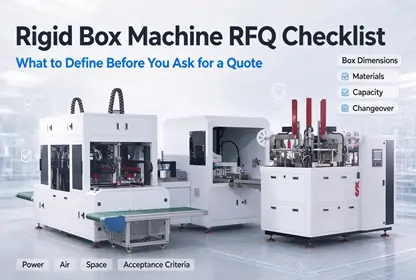
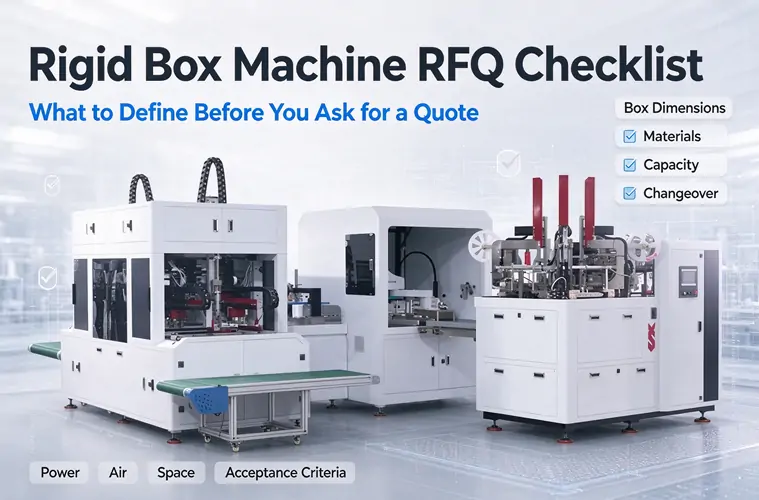
Rigid Box Machine RFQ Checklist: What to Define Before You Ask for a Quote
 Nov 24,2026
In the B2B equipment buying process, a vague inquiry often leads to a generic quote that doesn't accurately reflect your needs. To get a meaningful proposal for rigid box machine procurement, you need to provide suppliers with a detailed Request for Quotation (RFQ). This checklist covers the core information you must define before reaching out to a manufacturer.
1. Box Dimensions and Types
Don't just say "we make gift boxes." Specify the exact range of sizes and structural types you plan to produce.
- Minimum and Maximum Dimensions: Provide the L×W×H in millimeters for your smallest and largest products.
- Box Structures: Are they telescopic (top and bottom), drawer-style, or book-shaped? Each may require different forming stations.
2. Material Specifications
The materials dictate the machine's feeding and gluing capabilities.
- Grey Board Thickness: What range (e.g., 1.5mm to 3.0mm) will you use?
- Face Paper Weight: Specify the GSM and surface finish (e.g., coated, textured, specialty paper).
- Adhesive Type: Do you plan to use hot melt or cold glue?
3. Production Capacity and Speed
Be realistic about your required output. Distinguish between peak demand and average demand. Instead of just asking for the "fastest machine," ask for the sustainable output under actual production conditions. To understand how to calculate this, you can review our guide on production capacity planning.
4. Changeover and Batch Size
How often will you switch sizes or designs?
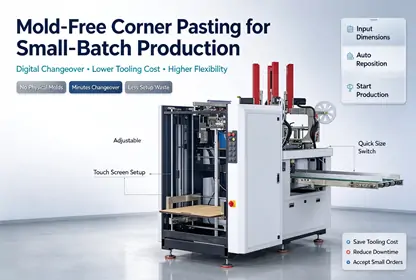
- High Mix, Low Volume: If you switch sizes daily, you need equipment with automatic mold adjustment or quick-release mechanisms.
- Low Mix, High Volume: If you run the same size for weeks, focus on maximum speed and stability.
5. Shop Floor Conditions
Your facility's infrastructure must support the new equipment.
- Power Supply: Confirm the voltage and phase available.
- Compressed Air: Check the available pressure and flow rate.
- Space: Provide the dimensions of the area where the machine will be installed.
6. Acceptance Criteria
How will you verify the machine is working correctly upon delivery? Define the target production speed, acceptable defect rate, and required positioning accuracy before signing the contract. Reviewing the equipment specifications in advance helps you set realistic acceptance standards.
Sample RFQ Structure
When drafting your email, use this structure:
- Company Background: Brief introduction to your packaging business.
- Project Goal: New line vs. replacing old equipment.
- Technical Specs: Dimensions, materials, and capacity requirements (use points 1-4 above).
- Site Readiness: Power and air availability.
- Timeline: When you expect delivery and installation.
Conclusion
A well-prepared RFQ saves time for both you and the supplier, ensuring the quote you receive is tailored to your actual production profile. Take the time to gather your technical and operational data first.
If you have compiled your requirements and are ready to discuss a project, submit your production brief to our team for a detailed evaluation.