English
 中文
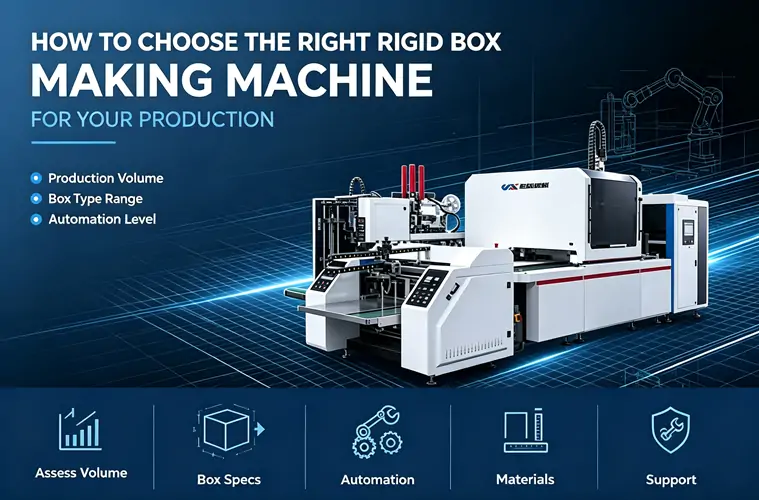
中文How to Choose the Right Rigid Box Making Machine for Your Production
 Aug 24,2026
Choosing a rigid box making machine is a significant investment decision that affects production efficiency, product quality, and long-term operating costs. The right choice depends on four key factors: production volume, box types and sizes, automation level, and material compatibility. This guide walks through each consideration to help buyers make an informed decision.
Start with Your Production Volume
Production volume is the most fundamental factor in equipment selection. It determines not only the type of machine you need but also the configuration and level of automation required.
Estimating Your Output Requirements
Before evaluating any equipment, calculate your target production volume:
- Daily output: How many boxes do you need to produce per shift?
- Peak demand: What is your maximum output requirement during busy seasons?
- Growth projection: How much will your production volume increase over the next 2-3 years?
For lower volumes (up to several hundred boxes per day), a semi-automatic or single-station automatic machine may be sufficient. For higher volumes or tighter deadlines, a fully automatic rigid box production line is often the better long-term choice[reference:4].
Consider the Box Types You Need to Produce
Different box types require different machine configurations. The table below outlines common box types and their equipment requirements.
| Box Type | Common Applications | Key Equipment Requirements |
|---|---|---|
| Top and bottom cover boxes (Heaven and Earth) | Gift boxes, mooncake boxes, electronics packaging | Precise positioning; dual-station forming capability |
| Drawer boxes | Luxury goods, cosmetics, watches | Accurate gluing and folding; visual positioning |
| Beveled edge boxes | High-end packaging, book boxes | Specialized corner pasting; precise edge folding |
| Standard rigid boxes | Shoe boxes, phone boxes, apparel packaging | Wrapping, gluing, and corner pasting capabilities |
JUXIN Machinery's equipment can handle a wide range of box types, including gift boxes, wine boxes, and mooncake boxes, with ongoing development for shaped boxes to meet diverse process requirements[reference:5]. For a complete overview, review the full product lineup to see which configurations match your box types.
Evaluate the Level of Automation
The choice between semi-automatic and fully automatic equipment is one of the most important decisions in the selection process. Each has distinct advantages depending on your production needs.
| Factor | Semi-Automatic | Fully Automatic |
|---|---|---|
| Production capacity | Lower; suitable for small to medium scale | Higher; suitable for large-scale, continuous operation |
| Labor requirement | Requires more manual intervention[reference:6] | Minimal manual intervention; runs continuously[reference:7] |
| Initial investment | Lower upfront cost[reference:8] | Higher upfront investment |
| Flexibility | More adaptable for varied production runs[reference:9] | Optimized for consistent, high-volume production |
| Consistency | More variation due to manual steps | High consistency; reduced human error |
Fully automatic machines can significantly enhance production speed and consistency, while semi-automatic machines offer flexibility and lower initial costs, making them suitable for different business needs[reference:10]. When configuring application solutions, consider both your current labor availability and future automation goals.
Assess Material and Size Compatibility
Different materials and box dimensions require specific machine capabilities. Key considerations include:
Paper and Board Specifications
The thickness and quality of paper and paperboard directly affect machine performance[reference:11]. Verify that the equipment can handle:
- The range of paper weights you plan to use
- Different board thicknesses for various box types
- Specialty materials such as textured or laminated papers
Box Size Range
Determine the minimum and maximum box sizes you need to produce[reference:12]. Key measurements include:
- Length, width, and height ranges
- Board thickness variations
- Corner radius requirements for beveled or rounded edges
Machines that offer automatic mold adjustment—where operators input the desired product size and the machine automatically adjusts[reference:13]—can significantly reduce setup time and minimize errors when switching between different box sizes.
Evaluate Key Machine Specifications
Beyond the high-level considerations above, buyers should compare specific technical specifications before making a decision.
Key Specifications to Compare
- Production speed: Boxes per minute or per hour under standard conditions
- Positioning accuracy: Especially important for visual positioning systems that achieve micron-level accuracy[reference:14]
- Glue application system: Uniformity and consistency of adhesive distribution
- Changeover time: Time required to switch between different box sizes or types
- Control system: PLC servo systems and touch-screen interfaces for monitoring and operation[reference:15]
Component Quality and Reliability
Equipment reliability depends significantly on the quality of components used. Machines that use electrical accessories from established brands such as Schneider and Siemens can offer better performance and reliability[reference:16]. Buyers should confirm the component specifications when evaluating different options.
Consider After-Sales Support and Service
Long-term support is an important factor that is often overlooked during the purchasing process. Key service considerations include:
- Warranty coverage: Standard warranty terms and what they cover
- Spare parts availability: Access to genuine parts and typical delivery times
- Technical support: Availability of remote and on-site support[reference:17]
- Installation and training: Support provided during machine setup and operator training
Reliable after-sales support can minimize downtime and protect your investment over the equipment's service life. For more details, review the available support services to understand what is included.
Selection Checklist for Rigid Box Equipment Buyers
Before finalizing your equipment purchase, verify the following:
- Production volume requirements are clearly defined for current and future needs
- Box types and sizes to be produced are confirmed and match machine specifications
- Automation level is appropriate for labor availability and production goals
- Material specifications (paper weight, board thickness) are within machine capabilities
- Key specifications (speed, accuracy, changeover time) meet production requirements
- After-sales support and spare parts availability are confirmed with the supplier
- Budget includes not just equipment cost but also installation, training, and ongoing maintenance
Frequently Asked Questions
Q: What is the difference between a semi-automatic and a fully automatic rigid box machine?
A: Semi-automatic machines require manual intervention for certain operations such as board positioning, while fully automatic machines run continuously with minimal human intervention[reference:18][reference:19]. Fully automatic machines offer higher production speed and consistency but require a larger initial investment.
Q: Can the same machine produce different types of rigid boxes?
A: Yes, many modern rigid box machines can handle multiple box types including top and bottom cover boxes, drawer boxes, and beveled edge boxes[reference:20]. Machines with automatic mold adjustment allow operators to input new dimensions for different box sizes[reference:21], reducing changeover time.
Q: What production volume is suitable for a fully automatic rigid box line?
A: Fully automatic lines are typically suitable for high-volume production. If you are producing several thousand boxes per day or have tight production deadlines, a fully automatic machine is often the better long-term choice[reference:22]. For lower volumes, a semi-automatic machine may be sufficient.
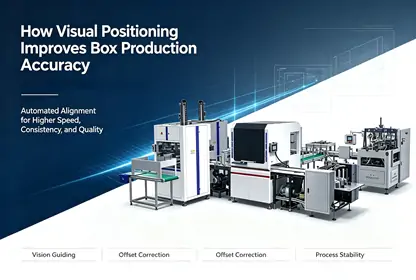
Q: How important is visual positioning technology in rigid box production?
A: Visual positioning technology is increasingly important for high-quality rigid box production. It can achieve micron-level positioning accuracy[reference:23], significantly improving production efficiency and product quality, especially for applications requiring precise alignment such as electronics and luxury goods packaging[reference:24].
Q: What should I look for in a rigid box machine supplier?
A: Key factors include the supplier's experience in the industry, component quality (e.g., use of established electrical brands)[reference:25], after-sales support availability, spare parts supply, and the ability to provide installation and training support[reference:26]. Requesting references or visiting existing installations can also be helpful.
Q: How do I determine the right box size range for my equipment?
A: Identify the smallest and largest boxes you plan to produce, including length, width, and height dimensions[reference:27]. Ensure the machine's specifications cover your entire range with some margin for future needs. Also consider board thickness variations, as different materials may require different settings.
Conclusion
Selecting the right rigid box making machine requires a systematic evaluation of your production needs, box types, automation requirements, and long-term goals. The key steps are:
- Define your production volume — both current and projected
- Identify the box types and sizes you need to produce
- Choose the appropriate automation level based on labor and output requirements
- Verify material and size compatibility with machine specifications
- Compare key technical specifications across equipment options
- Confirm after-sales support and service arrangements
Taking the time to work through these considerations will help ensure your equipment investment delivers the production capacity, quality, and reliability your business requires. For detailed technical guidance specific to your production setup, contact our technical team to discuss your requirements. You can also review available rigid box making machine models for detailed specifications.