English
 中文
How to Plan Production Capacity for a Box Making Line
 Oct 29,2026
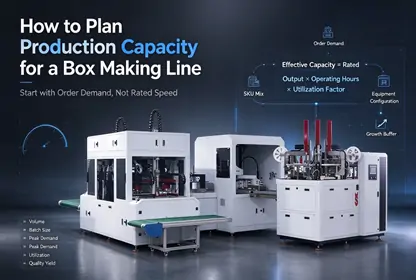
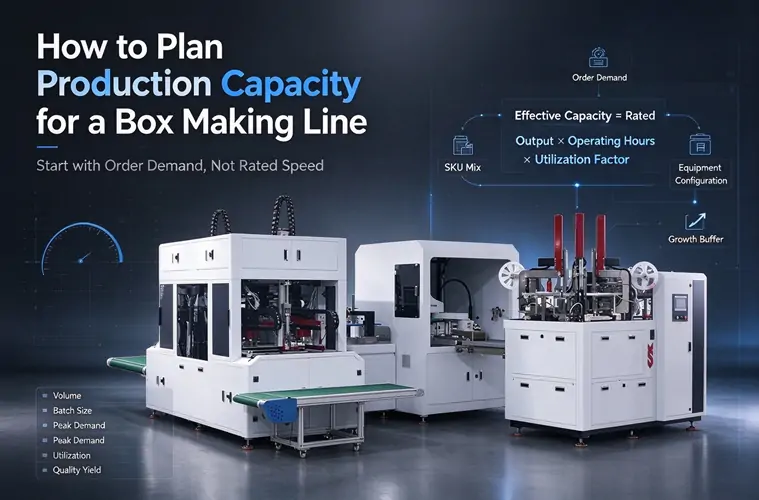
Planning production capacity starts with your order demand, not the machine's rated speed. Effective capacity is the rated output adjusted for changeover time, downtime, quality loss, and operator availability. Buyers who plan capacity around realistic effective output rather than theoretical maximum speed avoid over-investing in equipment or discovering capacity shortfalls after installation. This article explains how to estimate capacity needs and match them to rigid box making machine configurations.
Why Rated Speed Is Not Enough
Equipment specifications often state a maximum production speed, such as boxes per hour under standard conditions. This figure is useful for comparison, but it does not represent what a factory will actually produce day to day.
Effective capacity is lower than rated capacity because of:
- Changeover time between box sizes or designs
- Planned and unplanned maintenance
- Trial runs and setup at the start of each batch
- Quality rejects and rework
- Operator breaks and shift changes
- Material supply interruptions
Planning around rated speed alone can lead to two problems: overestimating output and committing to orders the line cannot deliver, or over-investing in a higher-speed machine that sits idle between changeovers.
Step 1: Quantify Your Order Demand
Before evaluating equipment, define the demand the line must meet. Key inputs include:
- Annual and monthly volume: Total boxes required per month and per year
- Number of SKUs: How many different box sizes, designs, or materials
- Batch size per SKU: Average and minimum run length
- Seasonality: Peak months and the ratio between peak and average demand
- Growth projection: Expected volume increase over the next two to three years
A factory producing two SKUs in large batches has very different capacity needs from one producing forty SKUs in small batches, even if total annual volume is the same.
Step 2: Calculate Effective Capacity
Effective capacity can be estimated with a simple framework:
Effective capacity = Rated output × operating hours × utilization factor
The utilization factor accounts for changeover, maintenance, and downtime. It varies by production profile:
| Production Profile | Typical Utilization Consideration |
|---|---|
| Single SKU, long runs | High utilization; changeover has limited impact |
| Few SKUs, medium batches | Moderate utilization; changeover and setup matter |
| Many SKUs, short batches | Lower utilization; changeover time dominates |
The exact utilization factor depends on your actual changeover time, maintenance practices, and quality yield. It should be verified through trial production or reference from similar operations, not assumed.
Step 3: Match Capacity to Equipment Configuration
Once effective capacity needs are clear, equipment configuration can be matched to demand. Key configuration questions include:
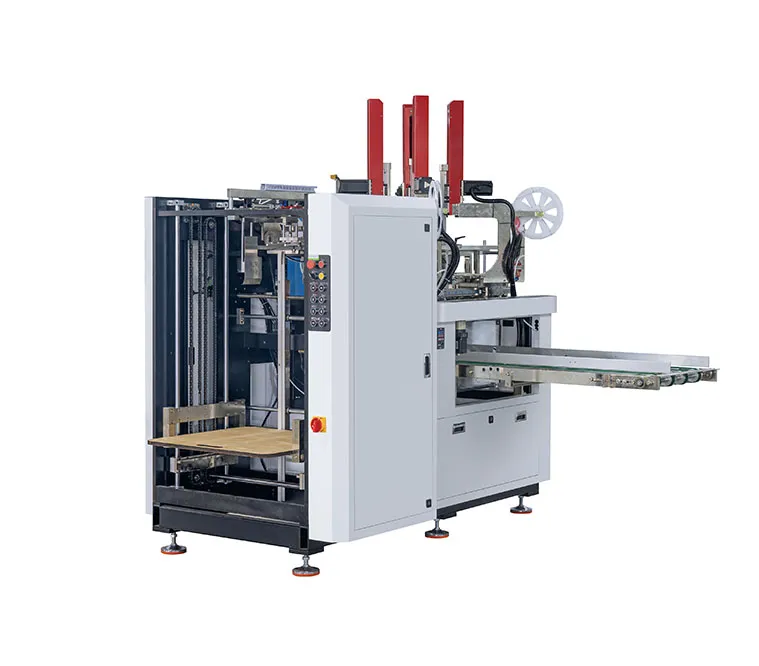
- Single-station vs dual-station forming: Dual-station configurations can support higher output but may require more floor space and investment.
- Automation level: Fully automatic lines reduce labor but suit high, consistent volume; semi-automatic lines offer flexibility for varied production.
- Changeover capability: For multi-SKU production, automatic mold adjustment and digital setup reduce changeover time and raise effective capacity.
- Material handling: Larger or heavier box formats may require different feed and handling mechanisms.
Reviewing the available equipment options helps identify which configurations align with your capacity and product mix.
Step 4: Allow for Growth and Buffer
Capacity plans should include a margin for growth and unexpected demand. Common approaches include:
- Planning initial capacity at 70 to 80 percent of projected peak demand
- Confirming whether the machine can be upgraded or added to later
- Keeping changeover capability flexible enough to absorb new SKUs
A line sized exactly to current average demand may struggle during peak seasons or when a new product is introduced. Confirming maintenance and support arrangements also helps keep capacity predictable over time.
Common Capacity Planning Mistakes
| Mistake | Consequence | Better Approach |
|---|---|---|
| Using rated speed as actual output | Overestimating capacity; missed deadlines | Apply a utilization factor based on real changeover and downtime |
| Ignoring changeover time | Underestimating capacity loss in multi-SKU production | Measure or estimate changeover time per run |
| Planning only for current demand | Capacity shortfall within one to two years | Include growth margin in the plan |
| Ignoring quality yield | Underestimating material and time loss | Include reject rate in effective capacity calculation |
| Choosing equipment before defining demand | Mismatch between equipment and actual needs | Define order demand first, then match configuration |
Capacity Planning Checklist
Before finalizing an equipment decision, confirm the following:
- Monthly and annual volume requirements are documented
- Number of SKUs and typical batch sizes are known
- Peak season demand ratio is estimated
- Changeover time for each production run is estimated or measured
- Expected quality yield is defined
- Growth projection for two to three years is included
- Equipment configuration matches both current and projected demand
- Maintenance and support arrangements are confirmed
Conclusion
Production capacity planning is a demand-driven process. Starting from order volume, product mix, and changeover frequency produces a more realistic capacity estimate than relying on rated machine speed. Matching that estimate to equipment configuration helps avoid both under-capacity and unnecessary over-investment.
If you are evaluating capacity needs for a new line or expansion, contact our team to discuss your order profile and production requirements. You can also explore our application solutions for different production scenarios.