English
 中文
中文How a Fully Automatic Rigid Box Line Reduces Labour Costs by Up to 80% While Boosting Throughput
 Jun 23,2026
In a rigid box workshop that still relies on a semi‑automatic or manual setup, each process step tends to have a pair of hands dedicated to it. One operator feeds the grooved cardboard, another applies glue, a third wraps the paper, and at least two more work on corner pasting and visual inspection. The throughput of the entire line is determined by the slowest person, and a single absent worker can bring production to a halt. As wages rise and order turnaround times shrink, this labour model becomes increasingly difficult to sustain. The alternative – a single integrated production system that takes raw board and printed paper and delivers finished, inspected boxes with minimal human intervention – is no longer a future aspiration. It is a proven technology available today.
Where the Labour Sits in a Traditional Line
A manual or semi‑automatic rigid box line for medium‑volumes typically needs four to six operators distributed across several standalone machines: a corner‑pasting unit, a box‑forming station, a wrapping machine, and often a separate glueing machine. Between these stations, work‑in‑progress accumulates, and operators spend a significant portion of their time moving material and adjusting machine settings. The result is a labour‑intensive process that rarely runs at the rated speed of any single machine because the line’s rhythm is set by the operators’ pace, not by a unified controller.
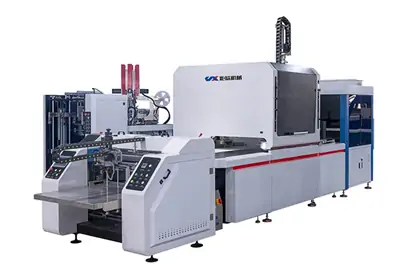
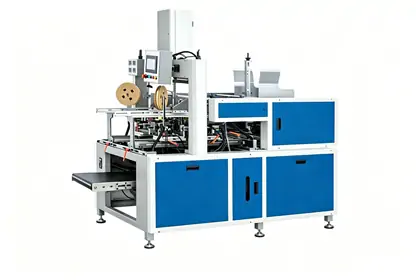
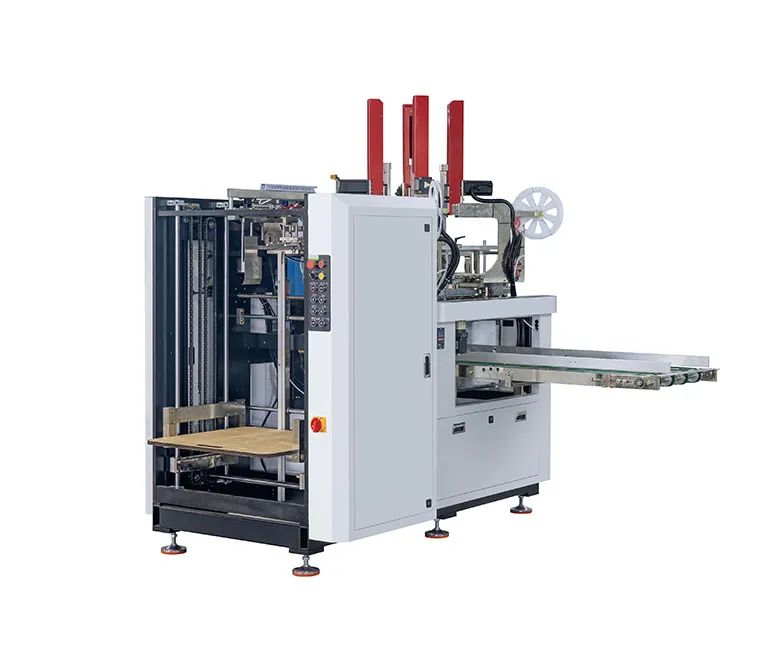
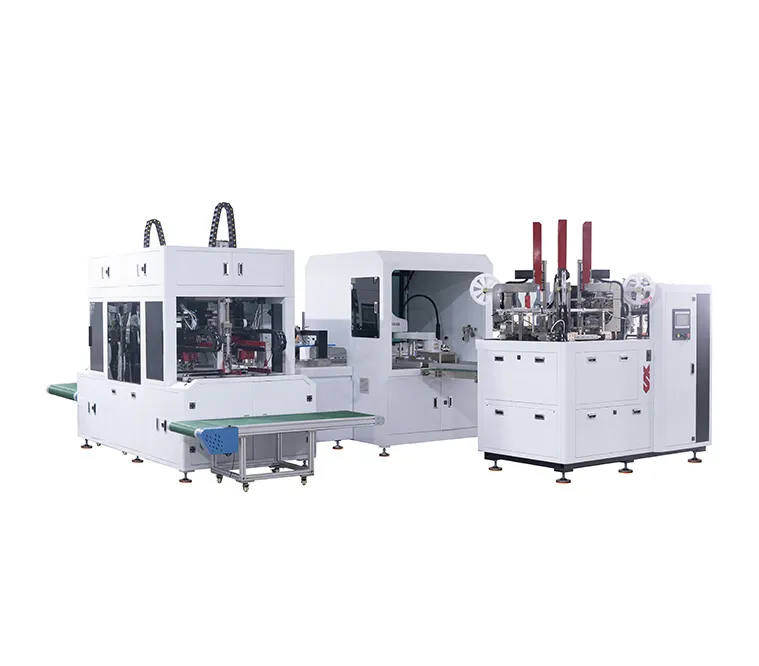
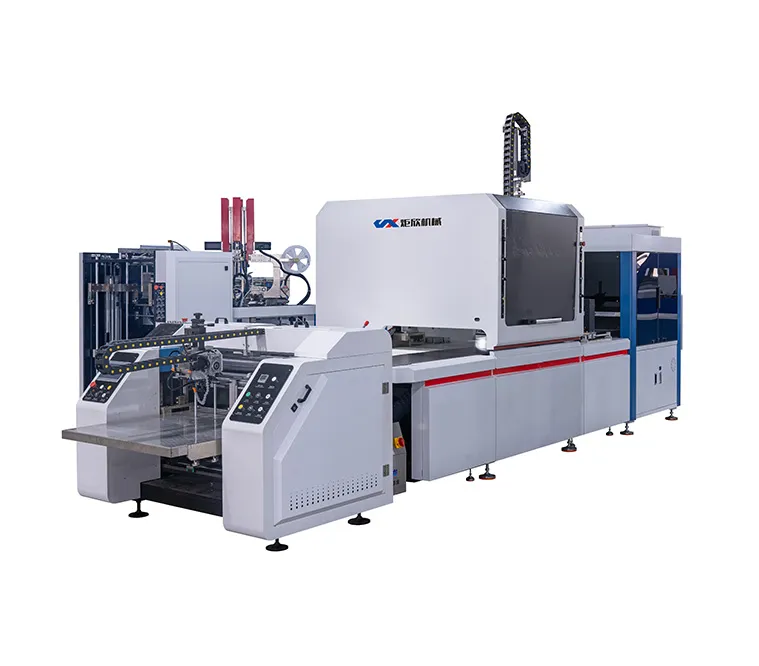
An integrated Fully Automatic Rigid Box Making Line collapses these separate steps into a single, servo‑synchronised sequence. The operator’s role shifts from performing the assembly tasks to loading raw materials – grooved board and printed wrapping paper – and monitoring the control panel. With visual positioning systems ensuring micron‑level accuracy, the machine handles gluing, positioning, forming, wrapping, and corner pasting in one pass. The result is that a single operator can manage the entire line, reducing direct labour on the box‑making process by approximately 75% to 80% compared with a traditional multi‑operator setup.
How Throughput Rises When the Line Runs as One System
Labour cost reduction is only half of the equation. The other half is that an automated line produces more boxes per shift. When the work stations are mechanically linked and electronically coordinated, the cycle time is determined by the machine’s engineering limits – not by the varying speed of individual operators.
Consider a typical mixed manual line producing luxury rigid boxes. Even with skilled workers, the effective line speed might be 10–15 boxes per minute, with the wrapping or corner‑pasting stages being the bottleneck. An integrated automatic line with dual box‑forming stations, such as the JX‑CS620B configuration, can sustain production rates several times higher than the manual benchmark, while maintaining consistent bond quality and dimensional accuracy. Because the machine runs at a controlled, repeatable pace, output becomes predictable, and production planning no longer needs to account for the variability of individual worker fatigue or manual skill differences.
The increase in throughput is not simply a factor of “running faster.” It comes from eliminating the material‑handling time between stations, removing the quality‑check pauses that operators insert after every manual glue or wrap operation, and reducing the rework caused by misaligned wraps or corners. The integrated quality‑inspection sensors on the line detect defects in line and stop only the affected box, rather than requiring a full line halt for inspection.
The Financial Equation
A quick comparison illustrates the savings. In a mid‑sized operation running two shifts per day, a conventional line might require 10 to 12 workers across both shifts. An automated line typically needs one operator per shift, plus occasional support for loading consumables. If the loaded labour cost per worker is, say, $800 per month – the figure will vary by region but serves as a reference – the annual saving just on direct headcount can be in the range of $80,000 to $100,000.
These savings alone often recover the capital difference between a semi‑automatic and a fully automatic installation within two to three years, depending on local wage levels and shift patterns. When the additional profit from the higher throughput is added, the payback period shortens further. Moreover, the automated line produces fewer defects, which means less wasted material and fewer customer returns – additional savings that compound over the machine’s life.
What Makes the Automation Effective
The labour and throughput gains are not created by simply adding motors to existing mechanical designs. Three specific technologies make the modern automatic line effective:
-
Servo‑driven axis control. Instead of a single mechanical cam that limits the machine to one box‑shape profile, multiple independent servo axes allow the wrapping, forming, and pressing sequences to be tuned for each job. This means the machine can switch between box sizes and shapes rapidly, without lengthy mechanical adjustments.
-
Visual positioning. High‑resolution cameras locate the printed paper relative to the board with a precision that surpasses manual alignment. This eliminates the slow, manual registration step and the waste caused by misalignment.
-
Integrated glue application and corner pasting. Rather than moving the partly‑finished box to a separate corner‑pasting machine, the line applies glue and folds the corners as part of the continuous sequence. The result is a finished box that requires no secondary handling.
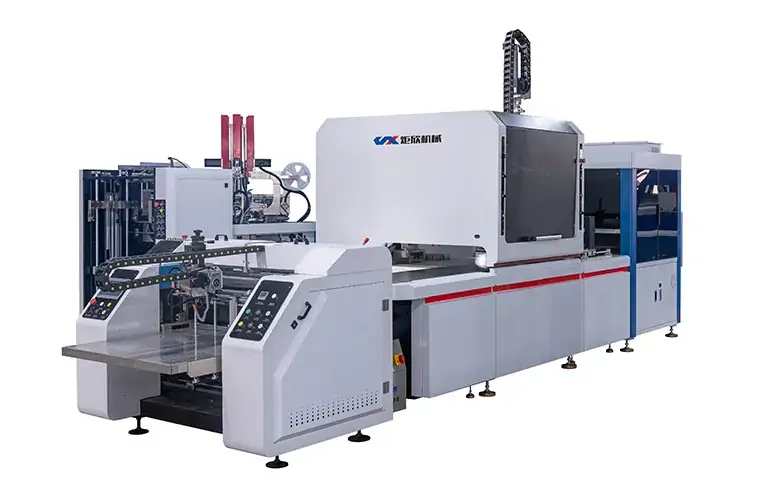
These features are standard on modern equipment like the Juxin JX‑CS800A and JX‑CS620B systems, which combine nine‑servo wrapping, visual registration, and dual forming stations to handle the full range of rigid box sizes without manual intervention.
Making the Transition
For packaging converters currently running manual or semi‑automatic lines, the move to a fully automated system does not need to be a single‑step capital outlay. Some begin by automating the most labour‑intensive station – often wrapping and glueing – and then integrate additional modules as production grows. However, the most cost‑effective result is achieved when the entire line is designed to work as a single unit from the start, because the line control system can optimise the cycle time across all stations.
The decision ultimately rests on a straightforward calculation: compare the current direct‑labour cost per box with the projected cost after automation, add the value of the additional throughput, and weigh the total saving against the capital investment. For many rigid‑box producers facing labour shortages and increasing order complexity, that calculation points firmly towards an automated line.
Investing in automation is a long‑term commitment, but when it reduces the dependency on hard‑to‑find skilled labour, raises daily output, and makes costs predictable, it becomes one of the most reliable ways to strengthen a packaging operation. For converters ready to evaluate a line that can be run by a single operator while delivering consistent, high‑quality boxes, Juxin’s fully automatic rigid box production solutions provide a practical starting point for understanding what is achievable within a given space and budget.