English
 中文
中文Why an Automatic Corner Pasting Machine Boosts Packaging Production Speed
 Jun 09,2026
A rigid box line can run at impressive speeds through the wrapping and forming stations, only to stall at the last step: taping the four corners. When this task is done by hand, every second spent aligning a glue strip, pressing it down, and checking for alignment adds up—and often, the line cannot reach its rated throughput because the finishing station simply cannot keep pace. The question is not whether corner pasting matters for speed; the question is whether your current process is the reason the entire line delivers fewer finished boxes per shift than it should.
Automating corner pasting changes the equation in three measurable ways: cycle time per box drops, consistency eliminates rework, and the operator who was taping corners can now be deployed upstream where human judgement adds more value.
The Hand-Taping Bottleneck That Limits Your Real Output
In a manual corner-pasting setup, even a skilled worker needs time to pick up the tape, position it accurately on the first corner, press, move to the next, and repeat. That sequence—performed several hundred times a shift—creates a hard ceiling on how many boxes can leave the finishing department. More importantly, manual taping introduces variability: tape placed slightly off-centre or with inconsistent pressure leads to corners that peel during transport, generating returns and rework that eat into the productivity gains made earlier on the line.
When the final step is inconsistent, the speed of the upstream machines becomes irrelevant. A forming machine that runs at 30 boxes per minute delivers no advantage if the taping station can only finish 10. That is the hidden bottleneck many rigid box manufacturers live with—not because they lack good operators, but because the manual process itself sets the pace.
How Automation Cuts Cycle Time and Increases Throughput
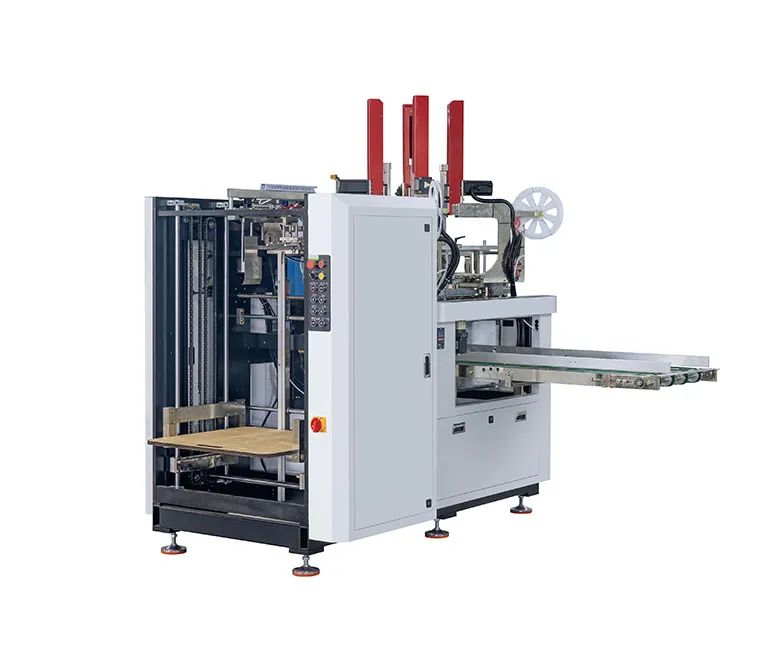
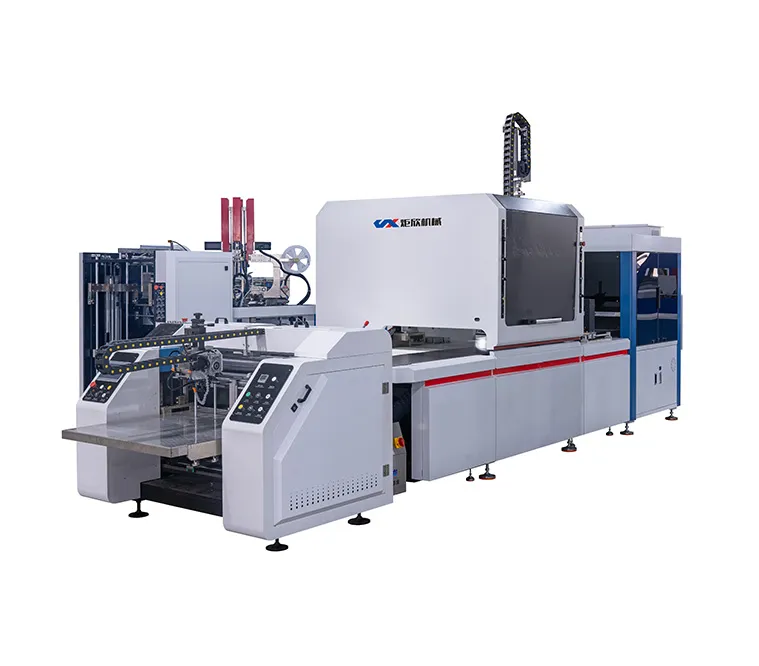
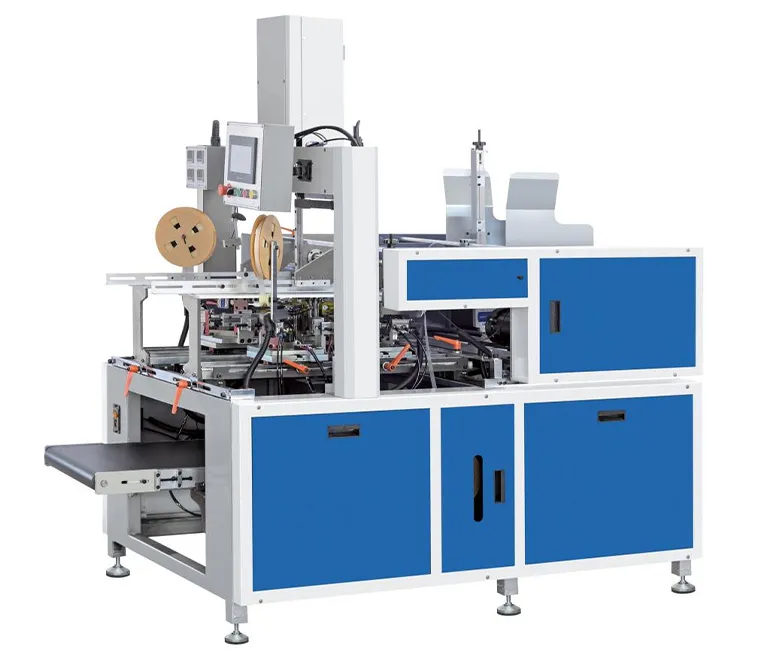
A dedicated automatic corner pasting system is designed to complete all four corners in one uninterrupted sequence. The box is positioned once, and the machine applies the adhesive tape to the front, back, and both sides simultaneously or in rapid succession. This single-cycle approach brings two immediate speed benefits.
First, the time per box drops significantly. While a manual process might take 20–30 seconds for a single box—depending on size and operator skill—modern automatic equipment can process 20 to 50 pieces per minute. That is not just an incremental improvement; it is a shift from finishing being the line's limiting factor to being a step that sets the pace for the entire production flow.
Second, automatic feeding and discharging eliminate the handling time between boxes. Instead of an operator reaching for a new box, positioning it, and repeating the same motions, the integrated feeding system presents each box to the taping head without pause. The result is a continuous output that matches the speed of upstream wrapping and forming equipment, allowing the complete line to run at its designed capacity. For companies examining high-speed automatic corner taping systems with integrated auto feeding for rigid box lines, the difference between fed and unfed cycle rates can be the deciding factor in hitting daily production targets.
Consistency Eliminates the Rework That Erodes Speed
Speed gains are undermined if quality issues force boxes to be reworked or rejected later. Manual corner pasting inevitably produces variation—one corner perfectly flush, the next slightly raised, the third with a small overhang that catches during packing. Each imperfect box must be inspected, and a percentage will need retaping or be downgraded.
Automated corner pasting removes this variability through two mechanisms. The PLC controls the tape application pressure, length, and position precisely, applying the same force at every corner, every cycle. Because parameters are set digitally and stored in the machine’s recipe, a new operator or a different shift cannot introduce drift. The corners come out identical whether it is the first box of the morning or the five-hundredth.
This repeatability has a direct impact on throughput because it drastically reduces the need for post-finishing inspection and rework. Boxes move from the taping station directly to packing, and the operator time previously spent checking every corner can be redirected to supervising multiple machines or feeding the upstream processes. For companies that already run tight margins on luxury boxes—where a single returned order due to peeling corners can wipe out the profit on a batch—consistency is not just about quality; it is about protecting the speed already achieved elsewhere on the line. Exploring PLC-controlled corner taping machines with recipe-based parameter storage for luxury box finishing clarifies how digital control translates into reliable output.
Automation Frees Labour for High-Value Tasks
The speed gain from automated corner pasting is not only about what the machine does; it is also about what the operator no longer has to do. When a manual taping station is automated, the person who was performing that repetitive task can be reassigned to a role that requires judgement and experience—adjusting the wrapping machine’s registration, inspecting incoming board quality, or managing changeovers between box formats.
In a typical rigid box line, operators are already stretched across multiple stations. Removing the corner pasting task from their workload effectively increases the available labour for other stations without adding headcount. That shift allows the entire line to sustain higher speeds because no single station is left unattended while someone deals with a pile of untaped boxes. For operations looking to integrate automatic corner taping solutions that work alongside existing rigid box production lines, the impact on labour allocation often justifies the investment faster than the cycle-time reduction alone.
Why Mechanical and Control Design Matter for Sustained Speed
Not all automatic systems deliver the same long-term speed gain. The components that drive the taping cycle—servo motors, PLC, guide rails, and pneumatic cylinders—determine how consistently the machine can maintain its rated pace across an eight-hour shift. A machine built with recognised industrial components, such as Schneider travel limit switches and Air TAC cylinders, is engineered to hold its timing and pressure without drift, even under continuous operation.
The control system plays an equally critical role. Touchscreen interfaces that display fault messages in real time allow operators to diagnose and clear issues without calling for maintenance, keeping downtime to seconds instead of minutes. When the machine can indicate whether the problem is a jam, an air pressure drop, or a misaligned tape roll, the response is immediate. That kind of transparency keeps the line moving at a steady, high pace rather than losing production to troubleshooting guesswork.
Is Your Corner Pushing the Brake on Your Line?
If a forming line produces 25 boxes per minute but only 15 fully finished boxes reach the shipping department per minute, the missing ten are not a mystery—they are trapped at the corner pasting step. Moving from manual to automated corner taping is one of the most direct ways to raise the effective speed of a rigid box line, because it removes a serial bottleneck and replaces it with a synchronised, programmable sequence.
Before investing in a faster forming or wrapping machine, it is worth measuring how many boxes actually leave the finishing station in a shift. The number will tell you whether the front of your line needs upgrading—or whether the back end is simply waiting for corners that could be taped in a fraction of the time. To see how JUXIN builds automated corner taping equipment that integrates with luxury box lines, you can explore JUXIN’s automatic corner pasting machines for rigid box finishing and review the specific speed and control features that support consistent high-output production.
*Disclaimer: The performance figures mentioned—such as speeds of 20–50 pieces per minute—are drawn from the publicly available specifications of the JX-TJ450 automatic corner pasting machine on Juxin Machinery’s website. Actual throughput depends on box size, material, operator setup, and production environment. Readers should verify equipment capabilities under their own conditions.