English
 中文
Installing and Commissioning a Rigid Box Making Machine: What to Expect
 Oct 20,2026
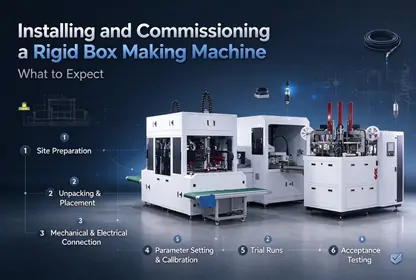
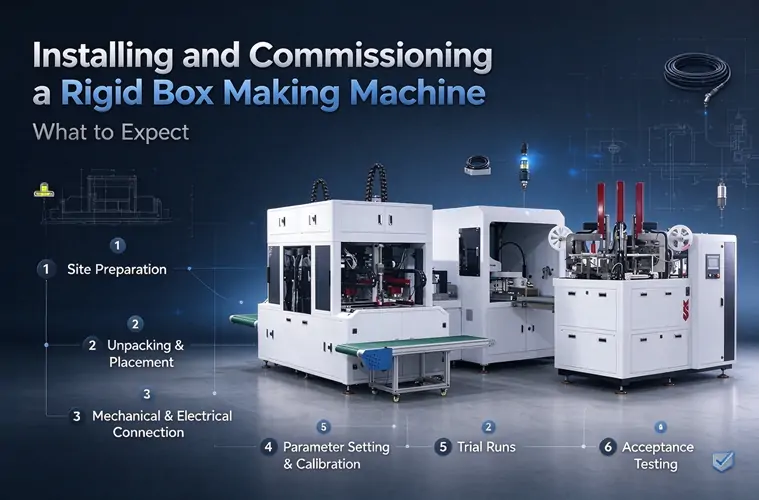
Installing and commissioning a rigid box making machine involves site preparation, equipment placement, mechanical and electrical connections, parameter setting, trial runs, and acceptance testing. The process typically takes several days to a few weeks, depending on machine complexity and site readiness. Understanding the sequence in advance helps buyers prepare the facility, coordinate staff, and avoid delays. This article outlines the key stages of installation and commissioning and what to prepare at each stage.
Why Installation Planning Matters
A machine that arrives before the site is ready creates unnecessary downtime and risk. Conversely, a well-prepared site allows installation and commissioning to proceed smoothly. Common issues that cause delays include:
- Insufficient floor space or load-bearing capacity
- Missing power, air, or adhesive supply connections
- Inadequate lighting or environmental control
- Operators unavailable for training
- Missing tools or lifting equipment
Planning these items before delivery helps reduce the time between arrival and first production.
Stage 1: Site Preparation
Site preparation should begin well before the machine arrives. Key considerations include:
- Floor space and layout: Confirm the machine footprint, operating clearance, and material flow path.
- Floor load capacity: Verify that the floor can support the machine's weight and dynamic loads.
- Power supply: Confirm voltage, phase, and capacity match the machine's requirements.
- Compressed air: Check pressure and flow rate requirements if the machine uses pneumatic components.
- Adhesive supply: Plan for glue storage, heating, and delivery to the machine.
- Lighting and environment: Ensure adequate lighting for inspection tasks and stable temperature and humidity where required.
- Safety: Confirm emergency exits, fire equipment, and machine guarding meet local requirements.
Confirming these details with the equipment supplier before delivery helps avoid last-minute modifications.
Stage 2: Unpacking and Placement
When the machine arrives, the following steps are typical:
- Inspect the packaging for damage before unpacking
- Check the packing list against the actual contents
- Move the machine to its designated position using appropriate lifting equipment
- Level the machine and secure it to the floor if required
- Remove shipping locks and protective materials
Any shipping damage should be documented and reported to the supplier immediately.
Stage 3: Mechanical and Electrical Connection
After placement, the machine is connected to site utilities and internal systems:
- Power connection and verification of electrical safety
- Compressed air connection and leak check
- Adhesive system connection and heating (if applicable)
- Sensor and control cable connection
- Verification of emergency stop and safety interlocks
This stage should be performed by qualified personnel following the manufacturer's instructions and local regulations. For an overview of how different equipment configurations are connected and configured, review the available product options.
Stage 4: Parameter Setting and Calibration
Once connected, the machine is configured for the intended production:
- Input of basic parameters for the first product
- Calibration of positioning sensors or vision systems
- Setting of wrapping pressure, folding positions, and glue application parameters
- Verification of conveyor and material feed alignment
For machines with automatic mold adjustment or visual positioning, this stage includes confirming that the system responds correctly to parameter changes.
Stage 5: Trial Runs
Trial runs verify that the machine operates correctly under production conditions. Typical trial run steps include:
- Running a small batch with the intended materials
- Inspecting output for alignment, wrapping quality, and glue consistency
- Adjusting parameters based on inspection results
- Repeating until output meets quality requirements
Trial runs should use the actual materials planned for production, not substitute materials, because material behavior affects results.
Stage 6: Acceptance Testing
Acceptance testing confirms that the machine meets the agreed specifications. Items to verify typically include:
- Production speed under standard conditions
- Positioning accuracy and consistency
- Glue application quality
- Changeover time between sizes
- Safety systems and emergency stops
- Noise and vibration levels
Acceptance criteria should be agreed upon before installation, ideally as part of the purchase contract. Confirm the available after-sales support arrangements for your region before commissioning begins.
Common Installation Issues and How to Avoid Them
| Issue | Typical Cause | Prevention |
|---|---|---|
| Delay in first production | Site not ready when machine arrives | Complete site preparation before delivery |
| Machine vibration or noise | Improper leveling or floor condition | Verify floor load and level the machine carefully |
| Positioning errors during trial runs | Incorrect calibration or parameter settings | Follow calibration procedures and use actual materials |
| Glue application problems | Adhesive supply not ready or wrong type | Confirm adhesive specifications and heating requirements |
| Operator errors during trial runs | Insufficient training | Schedule training before or during commissioning |
Preparing for Operator Training
Operator training is often included in commissioning. To get the most from training:
- Identify the operators and maintenance staff who will attend
- Prepare questions based on your production requirements
- Have the actual materials and product samples ready
- Document the training content for future reference
Trained operators are better prepared to run the machine, perform daily checks, and recognize early warning signs of issues.
Conclusion
Installing and commissioning a rigid box making machine is a structured process that benefits from advance planning. Site preparation, utility connections, parameter setting, trial runs, and acceptance testing each require attention. Preparing these items before delivery reduces downtime and helps ensure a smooth transition to production.
If you are planning a new installation or need guidance on site requirements and commissioning procedures, contact our team to discuss your project. You can also explore our application solutions for different production scenarios.