English
 中文
中文Best Fully Automatic Rigid Box Making Line Manufacturers: What to Look for in a Supplier
 Jun 25,2026
When a packaging converter decides to invest in an automated rigid box production line, the choice of manufacturer can determine whether the machine becomes a reliable production asset or a source of constant downtime. The market offers a wide range of suppliers, from well‑established names with decades of engineering experience to newer entrants competing mainly on price. Sorting through the options requires looking beyond glossy catalogues and exhibition stand promises to assess the tangible factors that affect how the line will perform over its working life.
This guide sets out the key criteria that experienced buyers use to evaluate suppliers of fully automatic rigid box lines, based on publicly available specifications, industry practice, and the technical demands of modern rigid box manufacturing.
1. Industry Experience and Track Record
A supplier with 15 years or more in rigid box machinery has typically refined its designs through multiple product generations, responding to real customer feedback and evolving packaging trends. This history matters because it means the manufacturer has encountered – and solved – the operational problems that first‑generation machines often carry. Components that are prone to wear, software bugs in the line controller, and design details that affect glue application or corner pasting consistency – all of these improve incrementally over the years of field experience.
When evaluating a supplier, ask for the founding date of the company and how long it has focused specifically on rigid box equipment, as opposed to general packaging machinery. A manufacturer that has specialised in this narrow segment for a decade or more is likely to have deeper process knowledge than one that makes a wide range of unrelated machines.
2. Technical Specifications That Reflect Real Production Needs
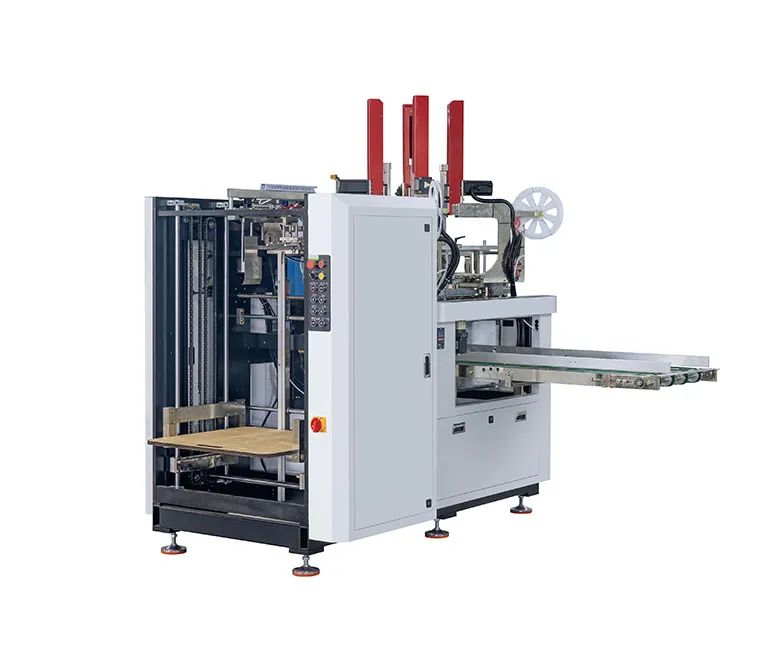
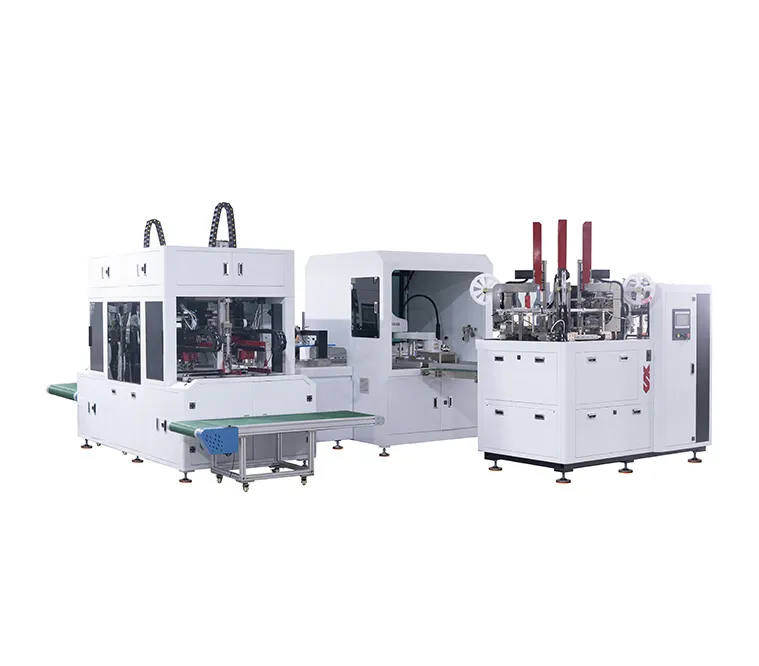
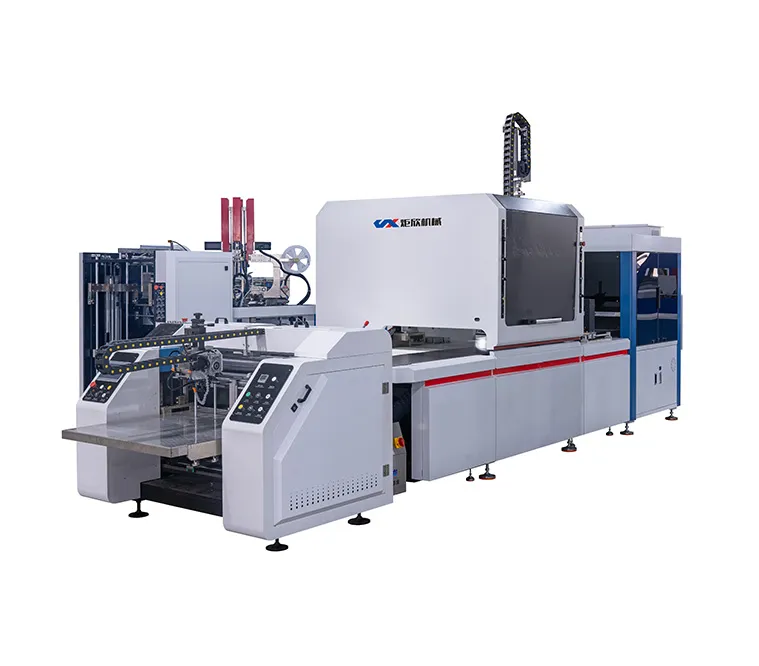
The key technical parameters of a rigid box line include maximum and minimum box size, production speed, forming station configuration, and the control system architecture. For example, Juxin's fully automatic line with dual box‑forming stations handles box widths from 60 mm to 400 mm and heights from 15 mm to 120 mm, covering the vast majority of luxury packaging formats. Production speeds vary by configuration, with dual‑station models offering significantly higher throughput than single‑station designs.
Buyers should compare their own product mix against the machine's specifications. If a factory produces a wide range of box sizes, quick changeover time becomes critical. If the output runs long, repeat orders, sustained production speed matters more. The best suppliers provide detailed technical data sheets that allow an objective comparison against the buyer's actual requirements.
3. Component Brands and System Architecture
The components inside a rigid box line – servo motors, PLCs, sensors, bearings, and pneumatic elements – largely determine the machine's reliability and serviceability. Well‑established suppliers typically specify internationally recognised brands for critical components. For instance, a Fully Automatic Rigid Box Making Line may incorporate Schneider electrical components, Siemens or YAMAHA servo systems, and Leister or equivalent bottom heaters. These brands have global service networks, which means spare parts and technical support are available in most manufacturing regions without long lead times.
When comparing suppliers, request a bill of materials or a list of the major component brands. If a manufacturer is unwilling to disclose these details, that may indicate the use of lower‑cost alternatives that could be harder to service.
4. After‑Sales Support and Warranty Terms
A rigid box line is a long‑term capital investment, and the quality of after‑sales support directly affects the total cost of ownership. Key questions to ask include the standard warranty period (one year is common in this industry, with some suppliers offering lifetime maintenance support), the availability of remote technical assistance, and the typical response time for on‑site service.
The warranty should cover both parts and, ideally, labour for the agreed period. Beyond the warranty, the supplier's spare‑parts distribution model matters. A manufacturer that maintains a 24‑hour stock of standard spare parts and can dispatch them quickly reduces the risk of extended downtime.
Installation and training are also part of the after‑sales package. A supplier that sends technicians to supervise installation and train the operator team – covering machine operation, daily maintenance, and basic troubleshooting – delivers more value than one that simply ships the machine with a printed manual.
5. Customisation Capability
Not every rigid box manufacturer produces the same type of packaging. Some specialise in shallow boxes for cosmetics, others in deep boxes for spirits, and still others in complex shapes with tandem lids or magnetic closures. The best suppliers offer a degree of customisation – whether it is adapting the forming station to a specific box geometry, integrating a special glue system for difficult substrates, or modifying the wrapping module for extra‑thick paper.
When discussing customisation, assess whether the supplier has an in‑house engineering team capable of producing custom tooling and software modifications. A supplier that relies entirely on standard configurations may not be able to adapt when the customer's product mix changes.
6. Factory Visits and Audit Rights
Before placing an order, visiting the supplier's factory provides insights that cannot be obtained from a brochure. The visit allows the buyer to see the manufacturing and assembly processes, inspect the quality control procedures, and, in many cases, watch a machine run the buyer's own sample materials.
A supplier that welcomes factory visits and encourages potential buyers to see machines in operation at existing customer sites demonstrates confidence in its product. Conversely, a supplier that is reluctant to allow inspections may have something to hide about its manufacturing standards or machine reliability.
7. Total Cost of Ownership vs. Purchase Price
The lowest‑priced machine rarely delivers the lowest total cost of ownership. Factors such as energy efficiency, glue consumption, spare‑part costs, and expected service intervals all influence the long‑term expense. A machine that uses a 9‑servo wrapping system, for example, can adjust each axis independently for optimal material use, potentially reducing waste compared with a mechanically cam‑driven design.
When comparing supplier quotes, buyers should request not just the machine price but also estimates of annual maintenance costs, typical spare‑part consumption, and the expected lifespan of major components such as belts, bearings, and sealing elements. Suppliers such as Juxin that provide detailed service documentation and transparent spare‑part pricing allow buyers to build a more accurate TCO model before committing.
Making the Final Decision
A structured evaluation of potential suppliers – based on experience, technical specifications, component quality, after‑sales support, customisation capability, factory audit results, and total cost of ownership – reduces the risk of choosing a machine that underperforms. The most reliable indicator of a supplier's capability is often its existing customer base and the willingness to provide references.
The rigid box industry demands both precision and productivity. Selecting the right partner for the production line is a decision that influences the business's competitiveness for the next decade. The checklist above provides a starting point for making that decision on facts rather than on sales rhetoric.