English
 中文
中文How to Choose the Right Corner Pasting Machine for Rigid Box Production
 Jul 31,2026
Selecting a corner pasting machine is not a one-size-fits-all decision. The right choice depends on your box dimensions, daily production volume, budget, and how frequently you change between box types. The JUXIN product range includes three distinct models—mold-free automatic, molded automatic with feeder, and manual—each designed for a different production scenario. Understanding the trade-offs between them helps you invest in a machine that matches your current needs and your growth plans.
1. Mold-Free vs. Molded: The Core Design Difference
This is the first decision point when selecting a corner pasting machine for rigid box production.
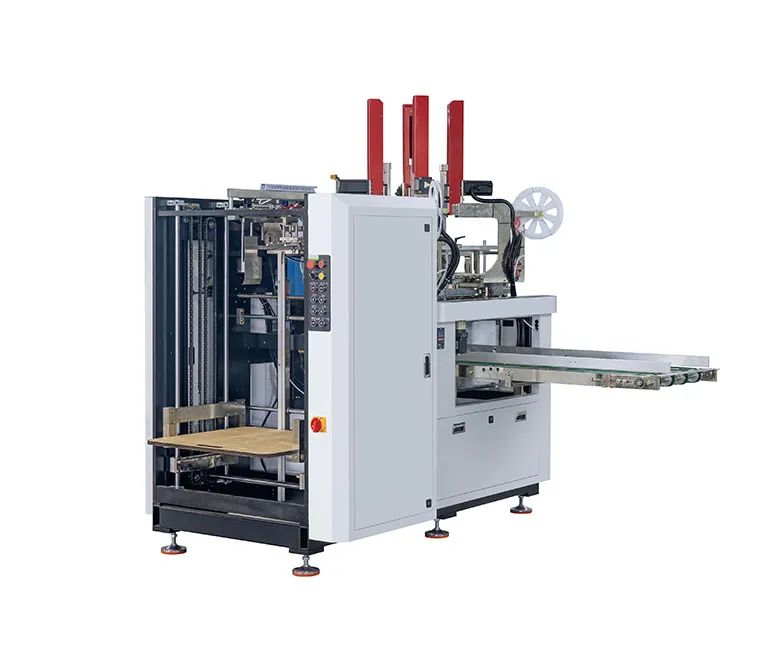
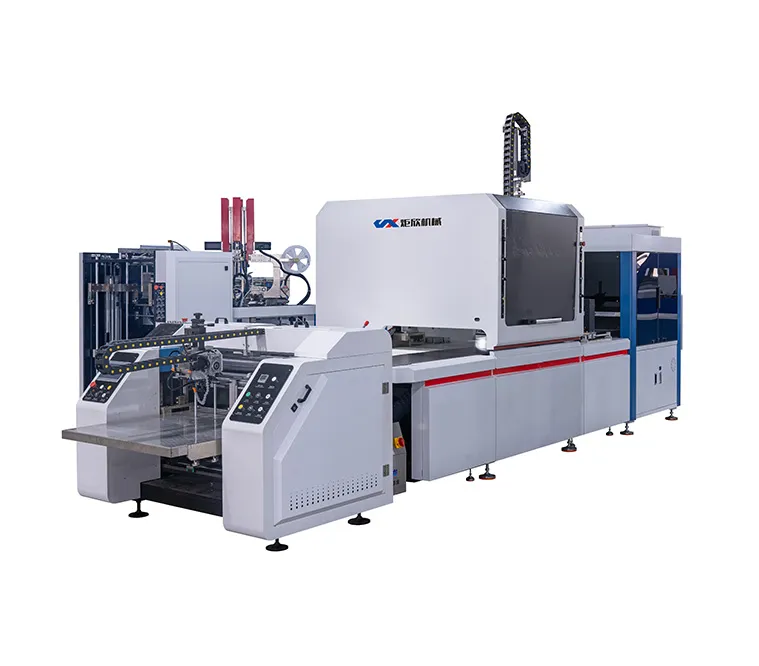
Mold-free machines, represented by the JX-450TS in the JUXIN lineup, use adjustable forming mechanisms rather than dedicated molds to position and tape the box corners. The key advantage is flexibility: switching from one box size to another requires only parameter adjustments on the control panel, not a physical mold change. The JX-450TS specification shows a size range of 85×85mm to 450×450mm, making it capable of handling a wide variety of box dimensions without tooling costs or changeover downtime. This is the preferred choice for manufacturers who produce multiple box sizes in smaller batches or who regularly take on custom orders with varying specifications.
Molded machines, such as the JUXIN JX-TJ450, use dedicated molds for each box size. The mold precisely positions the box during the taping cycle, which typically results in more consistent corner alignment—particularly important for luxury packaging where visual appearance is critical. The trade-off is that each box size requires its own mold set, which adds upfront tooling cost and requires physical mold changes when switching between sizes. The JX-TJ450 handles a slightly wider size range than the mold-free model (max case size 450×400×120mm, min 50×50×15mm) and achieves a higher maximum speed of 50 pcs/min compared to the JX-450TS's 40 pcs/min. For high-volume production of a limited number of box sizes—especially in luxury segments where corner precision is non-negotiable—the molded machine delivers measurable advantages.
2. Production Speed and Actual Output
Speed ratings on specification sheets tell only part of the story. Here are the rated speeds from the JUXIN product pages:
• JX-450TS (Mold-free): ≤40 pcs/min
• JX-TJ450 (Molded with feeder): 20-50 pcs/min
• JX-40 (Manual): 5-15 pcs/min
The molded machine's higher maximum speed is achievable when running the same box size in long, uninterrupted batches. However, if your production involves frequent size changes, the mold-free machine may deliver higher net daily output because it eliminates mold changeover time. The manual JX-40, while the slowest per minute, can still be the right choice for very small workshops, prototyping, or seasonal overflow capacity where the investment in automation cannot be justified. You can compare the specifications of all three corner pasting models on the product page.
3. Box Size Range and Application Limits
Each model in the JUXIN range targets a different size envelope:
| Model | Type | Max Box Size | Min Box Size |
|---|---|---|---|
| JX-450TS | Mold-free automatic | 450×450mm | 85×85mm |
| JX-TJ450 | Molded automatic with feeder | 450×400×120mm | 50×50×15mm |
| JX-40 | Manual | Not specified | 40×50×15mm |
The manual JX-40 handles the smallest boxes—down to 40×50×15mm—making it the only option for very small rigid boxes such as jewelry packaging or compact gift boxes. The molded JX-TJ450 covers the broadest range overall, from 50mm to 450mm, and is the only model that specifies a height dimension (120mm max), indicating suitability for deeper boxes. If your product line includes a mix of very small and medium-to-large boxes, you may need two different machines or a mold-free model with wide adjustability.
4. Automation Level and Labor Requirements
The three machines represent three levels of automation:
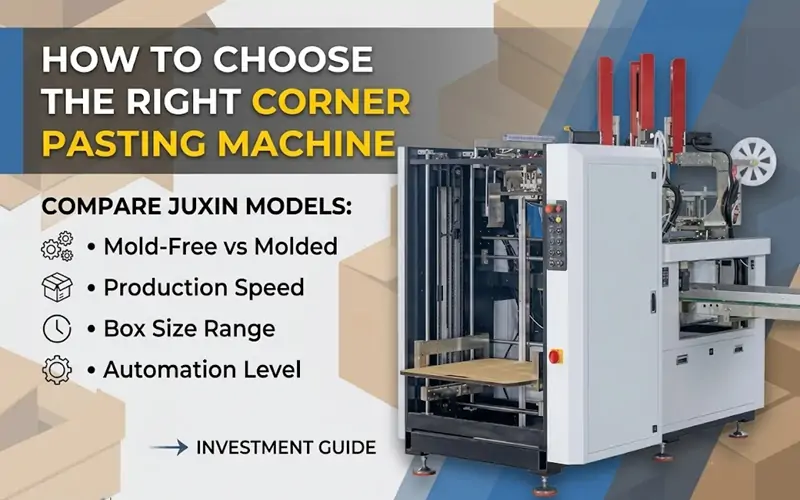
- • Fully automatic with auto feeder (JX-TJ450): The auto feeder reduces manual handling by automatically feeding boxes into the taping station. This is the most operator-independent option and suits lines where one operator oversees multiple machines.
- • Automatic without auto feeder (JX-450TS): The taping cycle is automatic, but the operator manually places each box into the machine. This still provides significant speed compared to manual operation while keeping the machine cost lower.
- • Manual (JX-40): The operator manually positions the box and activates the taping cycle. Speed depends entirely on operator skill. At 5-15 pcs/min, it suits low-volume production or as a backup machine.
Consider not only the current labor availability but also how it may change as your business grows. A machine that requires one dedicated operator today may still be the right investment if it produces at 3-4 times the speed of a manual alternative.
5. Future-Proofing and Integration
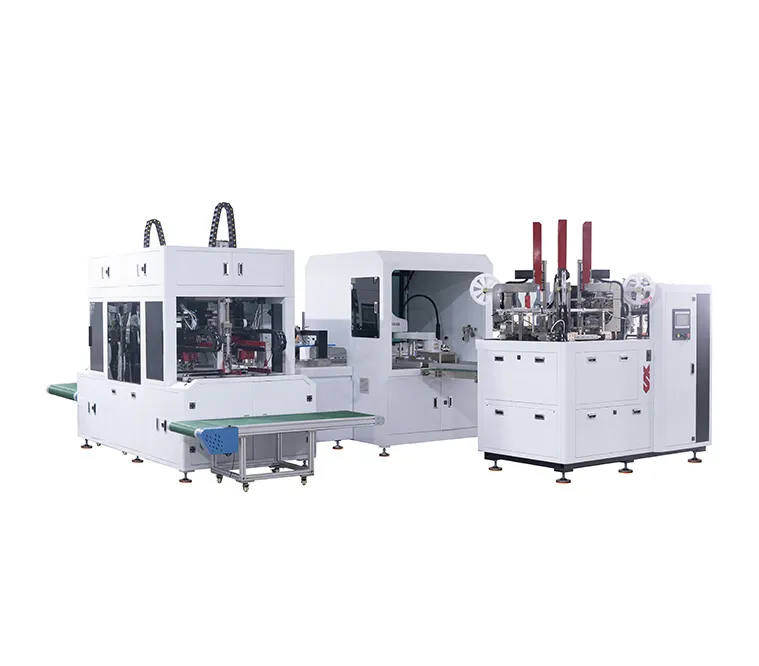
A corner pasting machine does not operate in isolation—it is part of a rigid box production line that may include a case making machine, a box wrapping machine, and a gluing and positioning system. The JUXIN product page describes the fully automatic line as "an integrated power functioning system, combined box taping, paper gluing, automatic positioning and box wrapping."
If you plan to expand from a semi-automatic to a fully automatic line in the future, choosing a corner pasting machine that can integrate with upstream and downstream equipment is important. The FAQ on the JUXIN page specifically addresses this: "the auto positioning system and automatic box wrapping machine can be adapted to customer's original line." When selecting a corner pasting machine, confirm with the supplier whether the model you choose supports integration with feeders, conveyors, and stacking systems that you may add later.
Frequently Asked Questions
Q: Can I produce different box sizes on a mold-free machine without any tooling changes?
A: Yes. The JX-450TS adjusts electronically via the control panel. There are no physical molds to change, which means size changeovers take minutes rather than the time required to swap and align molds. This makes mold-free machines particularly suitable for job shops and manufacturers with diverse product lines.
Q: Is a manual corner pasting machine still a viable option for a small business?
A: For startups, prototyping labs, or businesses producing under 1,000 boxes per day, a manual machine like the JX-40 provides an affordable entry point. The 5-15 pcs/min speed range means one operator can produce several hundred boxes per shift. As order volumes grow, the manual machine can become a backup unit while a fully automatic machine handles the main production.
Q: How do I decide between the JX-450TS and JX-TJ450?
A: The decision comes down to three factors: box variety, required corner precision, and production volume. Choose the JX-450TS (mold-free) if you produce many different box sizes and change between them frequently. Choose the JX-TJ450 (molded) if you run high volumes of a limited number of box sizes and need the most consistent corner alignment for luxury packaging.
Q: What is the minimum box size a corner pasting machine can handle?
A: The JUXIN manual JX-40 handles the smallest boxes, down to 40×50×15mm. The JX-TJ450 handles boxes as small as 50×50×15mm. The mold-free JX-450TS has a minimum of 85×85mm. If your product line includes very small rigid boxes, check the minimum size specification carefully.
Q: Does the machine use glue or adhesive tape for corner pasting?
A: The JUXIN corner pasting machines use high-temperature adhesive tape to fix the box corners. This method is described on the product page as saving consumables compared to glue-based systems while ensuring that the product angles are "square, stable, and beautiful."
Conclusion
Choosing the right corner pasting machine requires matching three operational factors—box size range, production volume, and changeover frequency—to the capabilities of the available models. The mold-free JX-450TS offers flexibility for varied production, the molded JX-TJ450 delivers speed and precision for dedicated high-volume runs, and the manual JX-40 provides an accessible entry point for low-volume or specialized production. Rather than focusing solely on the rated speed, consider how each machine will perform across an entire shift, including setup and changeover time.
If you are unsure which model best fits your product mix and production goals, you can contact JUXIN to discuss your rigid box production requirements and get a recommendation based on your specific box sizes and volume targets.