English
 中文
中文Manual vs Automatic Corner Pasting: 2026 ROI Comparison Guide
 May 27,2026
Every rigid box manufacturer knows the frustration. Your die-cutting and wrapping stations run smoothly, but at the corner pasting station, a queue of half-finished boxes piles up. A skilled worker meticulously applies tape, brushes glue, and presses each corner — a process that hasn't fundamentally changed in decades. When a large order for luxury gift boxes lands on your desk, you face a choice: hire and train more staff, or invest in an automatic corner pasting machine. This guide will walk you through the numbers, the hidden costs, and the tipping point where an automated system pays for itself — often faster than you think.
The Real Cost of Doing It by Hand
Manual corner pasting relies on experienced operators. Finding and retaining these workers is becoming harder. In many manufacturing regions, labour costs rose 5–8% annually over the past three years, according to data from China's National Bureau of Statistics and industry salary surveys. Beyond wages, manual work introduces inconsistency. A tired operator might apply uneven pressure, leading to weak corners that fail during shipping. Rework and returns eat into margins that luxury packaging clients won't tolerate.
Then there is speed. A skilled worker can paste around 300–400 corners per hour. That sounds acceptable until you calculate how many boxes per shift you actually need. A standard rigid box requires four corners, so 400 corners/hour equates to 100 boxes per hour. For a daily order of 2,000 boxes, you need two workers dedicating a full shift — just for corners. Seasonal spikes? You either pay overtime or turn down orders.
What Automation Actually Changes
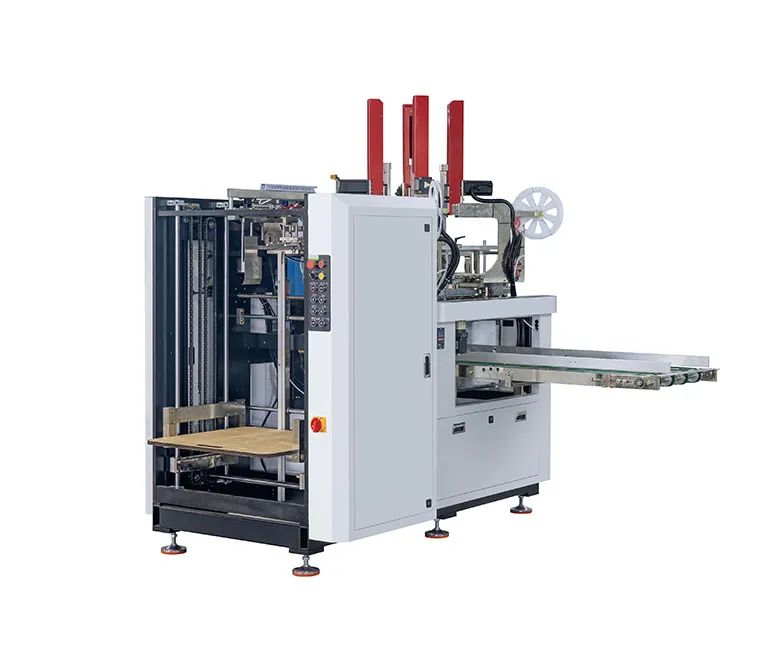
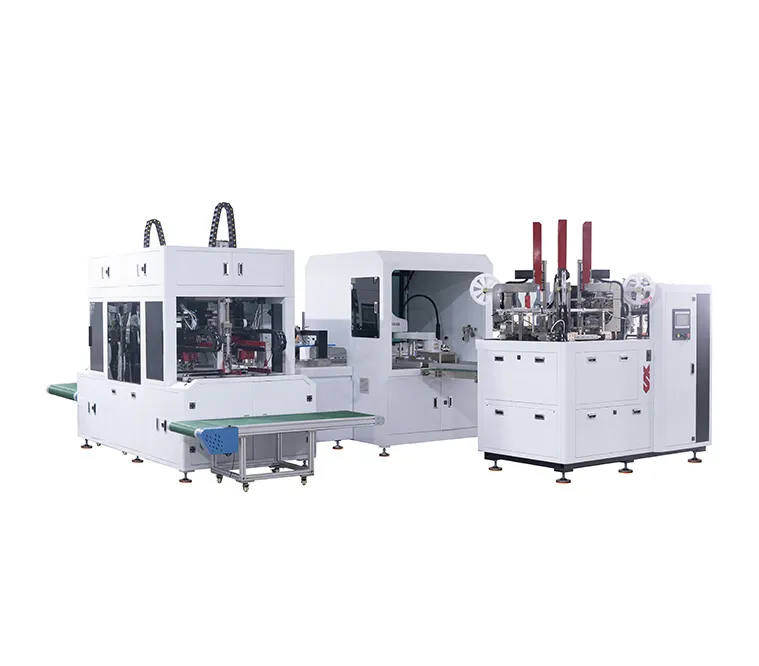
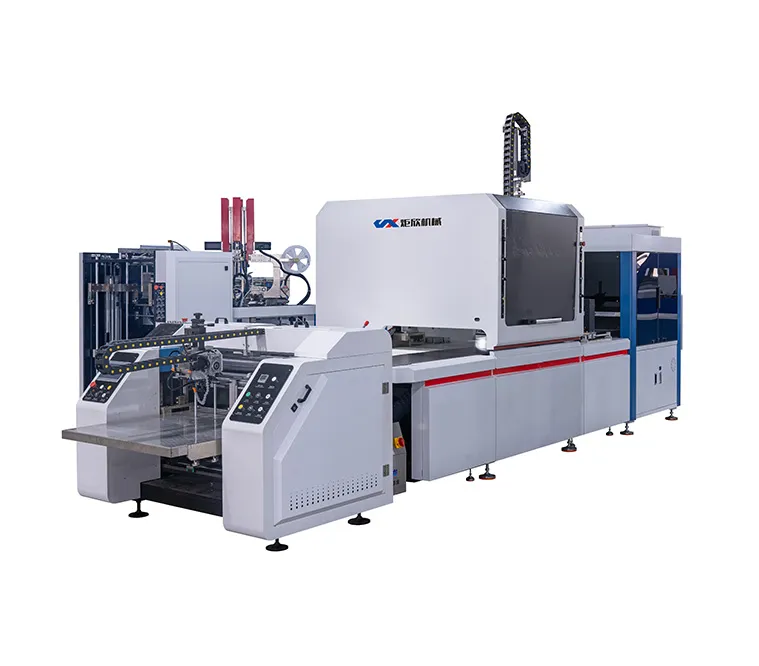
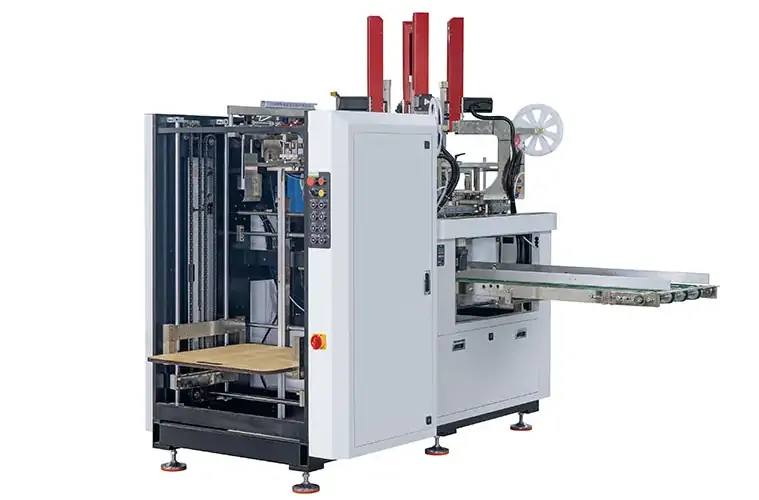
An automatic corner pasting system — with servo-driven positioning and hot-melt adhesive application — changes the equation. A four-head model can complete all four corners of a box in 5–8 seconds, outputting 400–500 boxes per hour per operator. One unskilled operator can oversee the equipment, loading blanks and collecting finished pieces. Quality becomes consistent because the system applies uniform pressure and precise glue volume every time. That precision also cuts glue consumption by up to 30%, as found in field reports from equipment manufacturers. Less glue means lower consumable costs and cleaner finished products that impress premium buyers.
Let’s look at a real-world comparison. A mid-sized rigid box factory in Guangdong, producing 10,000 luxury phone cases per day, switched from six manual pasting workers to one automatic quad-head corner forming system. They reported a reduction in direct labour cost from 3,600/monthto3,600/monthto900/month (including machine operator), glue savings of $200/month, and a 40% drop in corner-related quality complaints. Their payback period was under 14 months.
Head-to-Head Comparison Table
| Factor | Manual Corner Pasting | Automatic Corner Pasting |
|---|---|---|
| Output per operator (boxes/hr) | 80–120 | 400–500 |
| Labour for 2,000 boxes/day | 2–3 skilled workers | 1 unskilled operator |
| Corner strength consistency | Operator-dependent | Uniform pressure and glue |
| Glue waste | High (over-application) | Low (precision dispensing) |
| Set up a changeover for different box sizes | Fast (manual adjustment) | 5–15 minutes (tool-free in advanced models) |
| Typical payback period | N/A | 12–18 months (labour savings alone) |
For small-batch custom work — say, 50 boxes of a unique design — a flexible automated setup with quick mould change can still compete. Some machines now boast 10-second mould changes, making short runs economically viable. Evaluating a rapid-changeover corner taping solution can help you decide if automation fits your product mix.
When Does the Investment Pay Off? The ROI Formula
The decision depends on three variables: your monthly order volume, your local labour cost per worker, and the specific automated equipment price. A simple formula:
Monthly savings = (number of workers replaced × monthly wage) + monthly glue savings – machine financing cost
Assume: replacing 2 workers at 800/month, saving 800/month each, saving 100 in glue, and a machine lease of 500/month.Monthlynetgain=500/month.Monthlynetgain=1,600 + 100–100–500 = 1,200.A1,200.A15,000 machine would pay back in 12.5 months. Adjust numbers for your own situation.
But beyond pure cost, consider the opportunity value. An automated line can accept larger orders that you previously declined. It can reduce lead times, making you more competitive in the luxury packaging market, which is projected to grow at over 5% CAGR through 2030, according to Smithers. Capturing that growth often requires the capacity that only automation provides.
Avoiding Common Pitfalls
Buying automation without proper evaluation can lead to underutilization. A common mistake is choosing equipment that cannot handle your box size range or material thickness. Another is ignoring after-sales support and spare parts availability. Before you commit, ask for sample testing with your actual materials and designs. Check whether the supplier offers remote diagnostics or local service. Considering a production-grade automatic rigid box corner assembly equipment with proven field support can prevent expensive downtime.
Future-Proofing Your Investment
The trend is clear: the global corner pasting machine market is expected to grow at a CAGR of around 7% through 2033, driven by e-commerce luxury packaging and sustainability demands. Machines are becoming smarter, with IoT connectivity enabling real-time glue monitoring and predictive maintenance alerts. Exploring versatile automatic corner taping technology now positions you to adopt these innovations incrementally rather than facing a costly leap later.
If you are evaluating options to upgrade from manual or semi-automatic processes, you can review JUXIN’s corner pasting solutions for detailed specifications, video demonstrations, and a custom ROI calculation based on your production data.
Final Thoughts
Manual corner pasting served the industry well, but market pressures are shifting the break-even point toward automation earlier each year. For many box manufacturers, 2026 is the year the math clearly favours an automated approach. Whether you ultimately choose a manual process or a modern corner pasting machine, start by mapping your current true cost per corner — including labour, glue, rework, and opportunity loss. The number on the bottom line often makes the decision for you.